VIA Project, Canton of Solothurn
A combination of residential, care, and commercial spaces
VIA stands not only for the location—but also for the project’s philosophy. Diversity, integration, and senior housing form the foundation for economic and social value.
As part of a project study, we developed a mixed-use solution combining residential and commercial space for two parcels of land with existing commercial buildings. By integrating residential, care, and community-oriented uses, we created a robust, sustainable concept that offers long-term returns and social relevance.
Based on research conducted with the Federal Statistical Office, the Office for Construction Planning of the Canton of Solothurn, the Cantonal Aging Strategy 2030, and other sources, we reached the following conclusion:
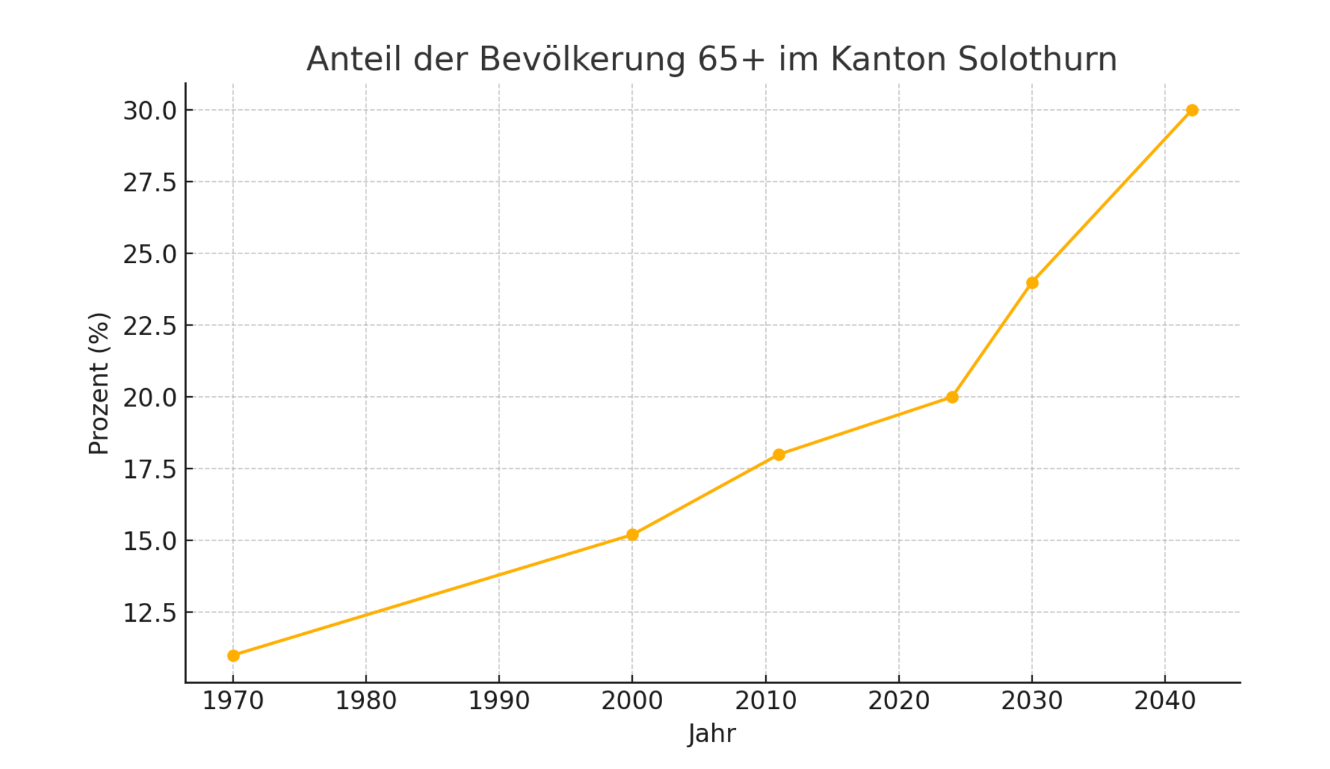
- The proportion of people aged 65 and older rose from 11% (1970) to 20% (2024); according to projections, this age group will grow by 33% by 2030
- In addition, there has been a sharp increase in single-person households among people over the age of 65
- The goal of the aging strategy in the Canton of Solothurn is to create integrated services with flexible care; new care facilities are actively being sought
After evaluating five usage scenarios, a clear recommendation emerged in favor of a mixed-use model comprising 70% residential units (half rental, half owner-occupied) and 30% nursing home facilities. This option offers the best balance between immediate return on investment, long-term revenue security, and political feasibility.
Benefits at a Glance
- Stable income through diversification: Ownership , rental income, and maintenance each generate predictable income independently of one another.
- High cash flow in Year 1: CHF 27.7 million from apartment sales, parking spaces, and rental income → over 40% of the total investment.
- Recurring revenue over 10 years: CHF 3.13 million annually from a nursing home, rental apartments, and existing commercial properties
- Political support and social relevance: Nursing home meets a proven need in the canton of Solothurn – better chances of approval
- Flexible exit strategies for investors: Properties can be sold individually or in blocks; care facilities can be leased on a long-term basis
Design and Architectural Concept
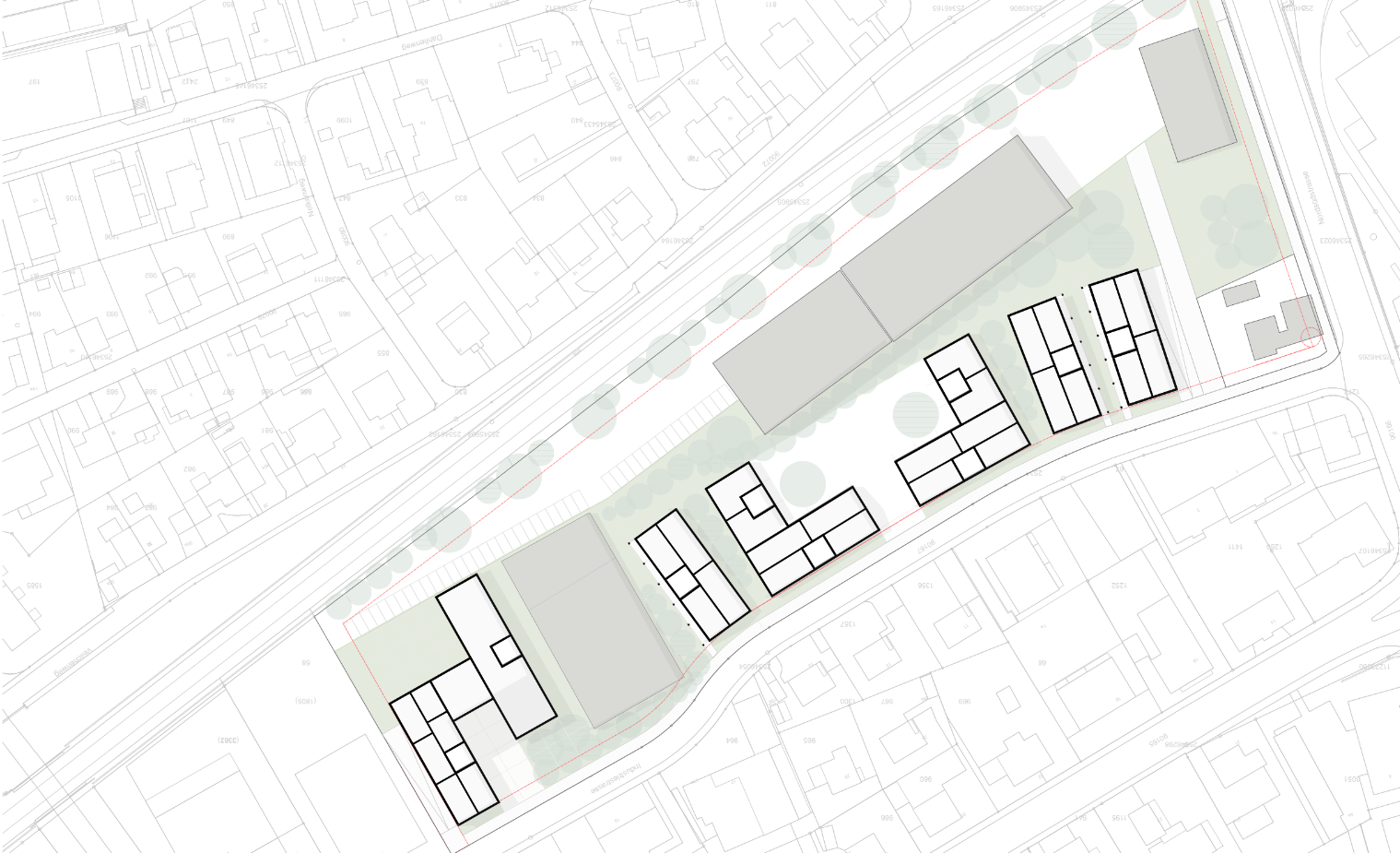
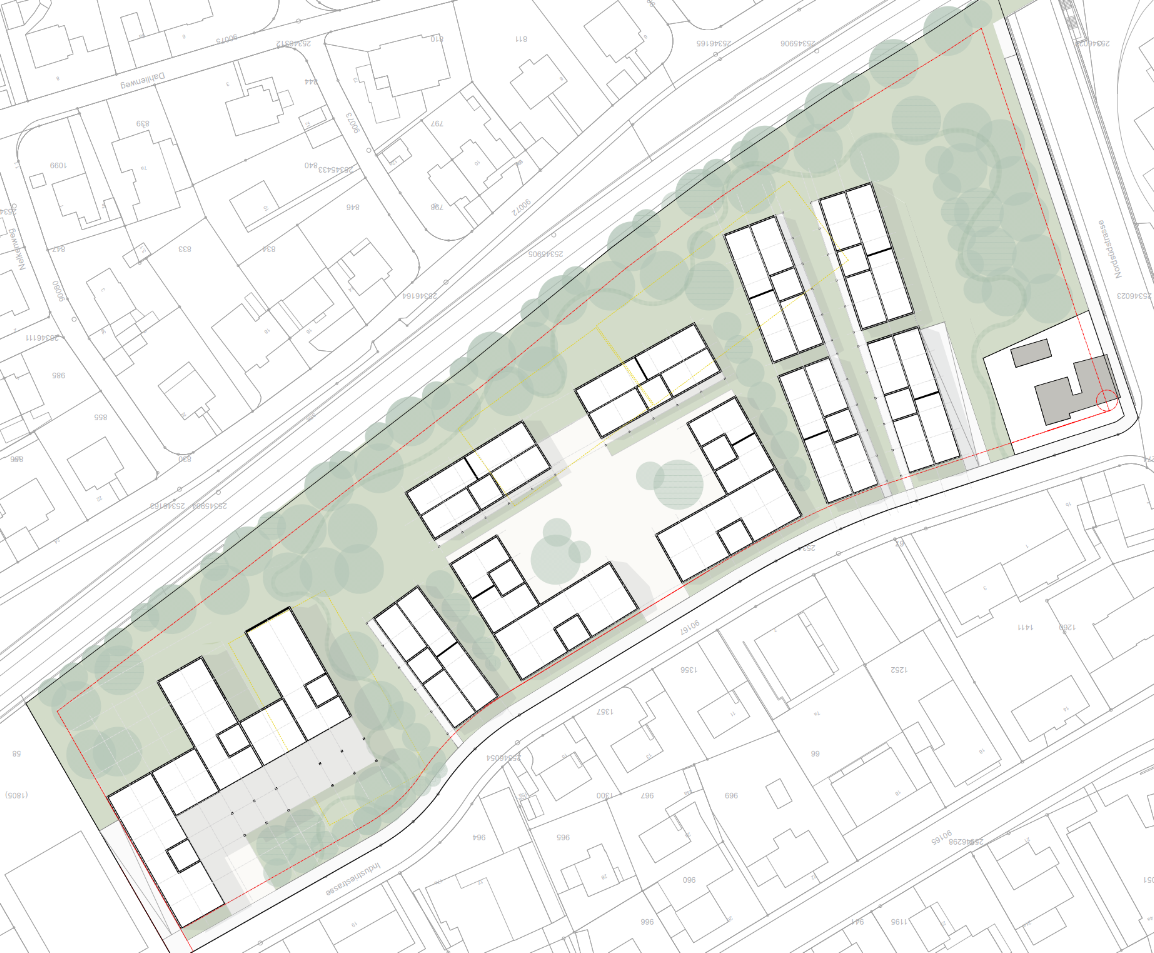
Based on the proposed land-use distribution, an urban design concept was proposed that spatially integrates care facilities, residential spaces, and neighborhood-oriented commercial uses. The goal was to create a robust, permeable structure with clear focal points and varied open spaces that blends into the existing environment while also providing new impetus.
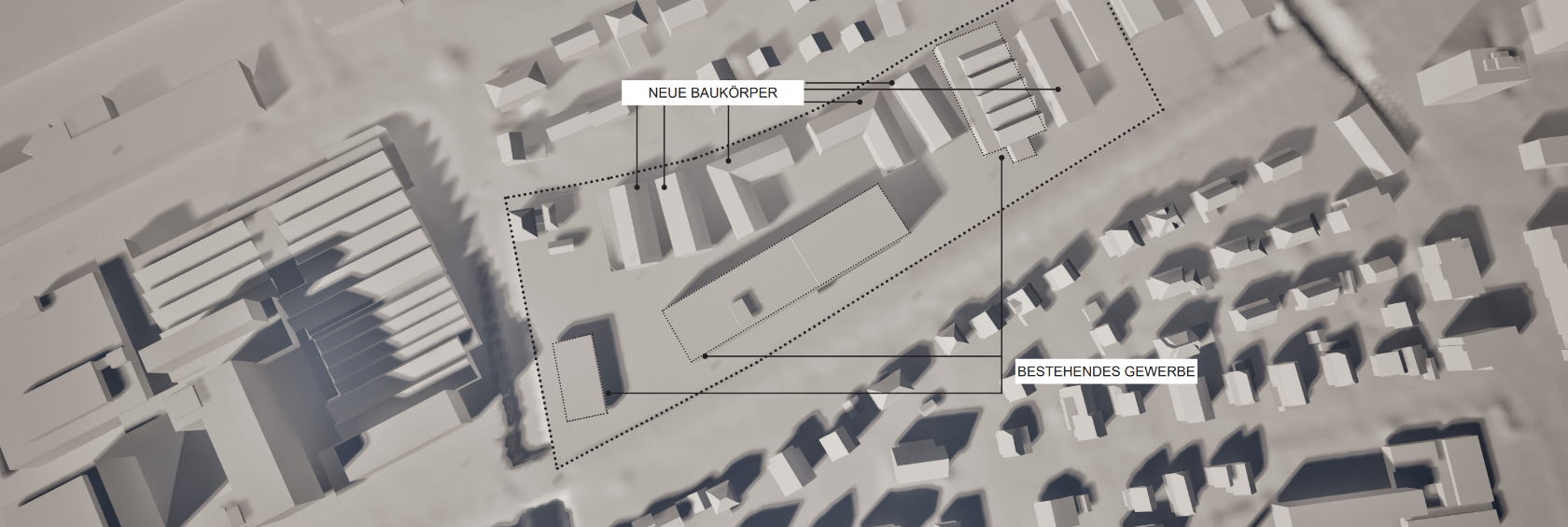
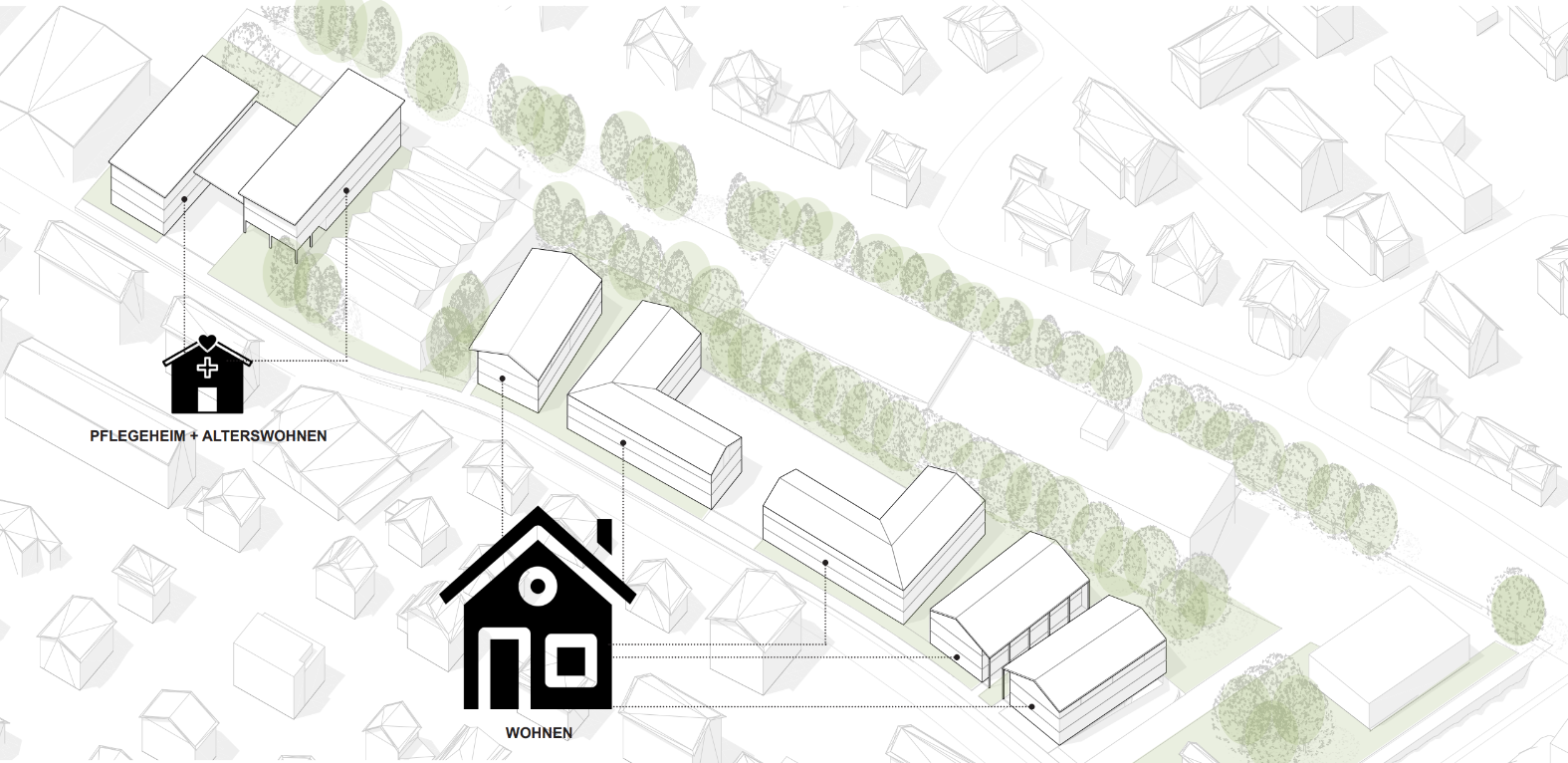
The axonometric projection illustrates the project’s spatial arrangement within its context. Through staggered building heights and precisely positioned structures, an ensemble emerges that appears both self-contained and capable of integrating with its surroundings. The variation in building heights mediates between the dense existing development to the south and the open green space to the north. This interplay not only creates spatial quality but also a strong presence along the access axis.
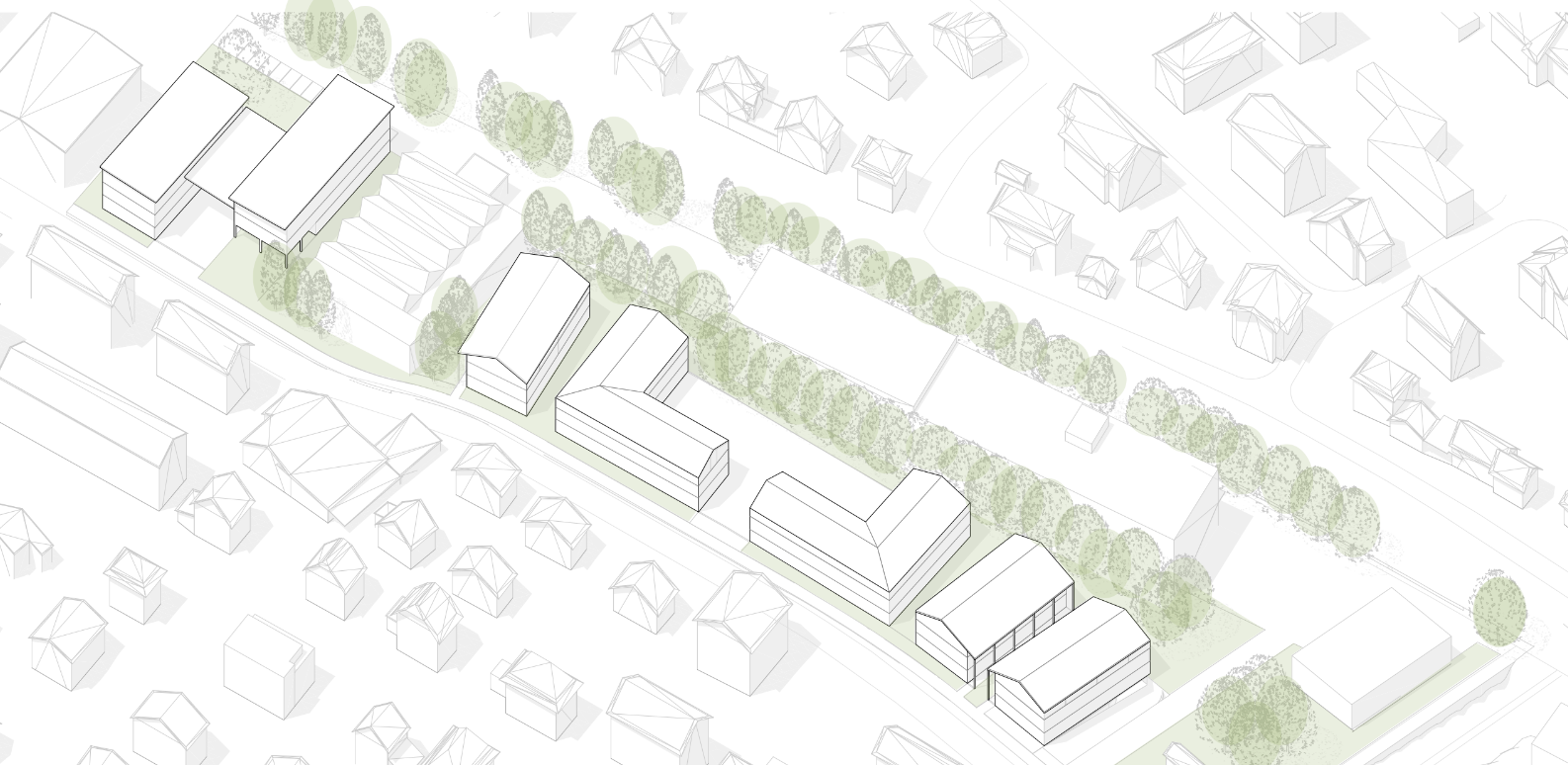
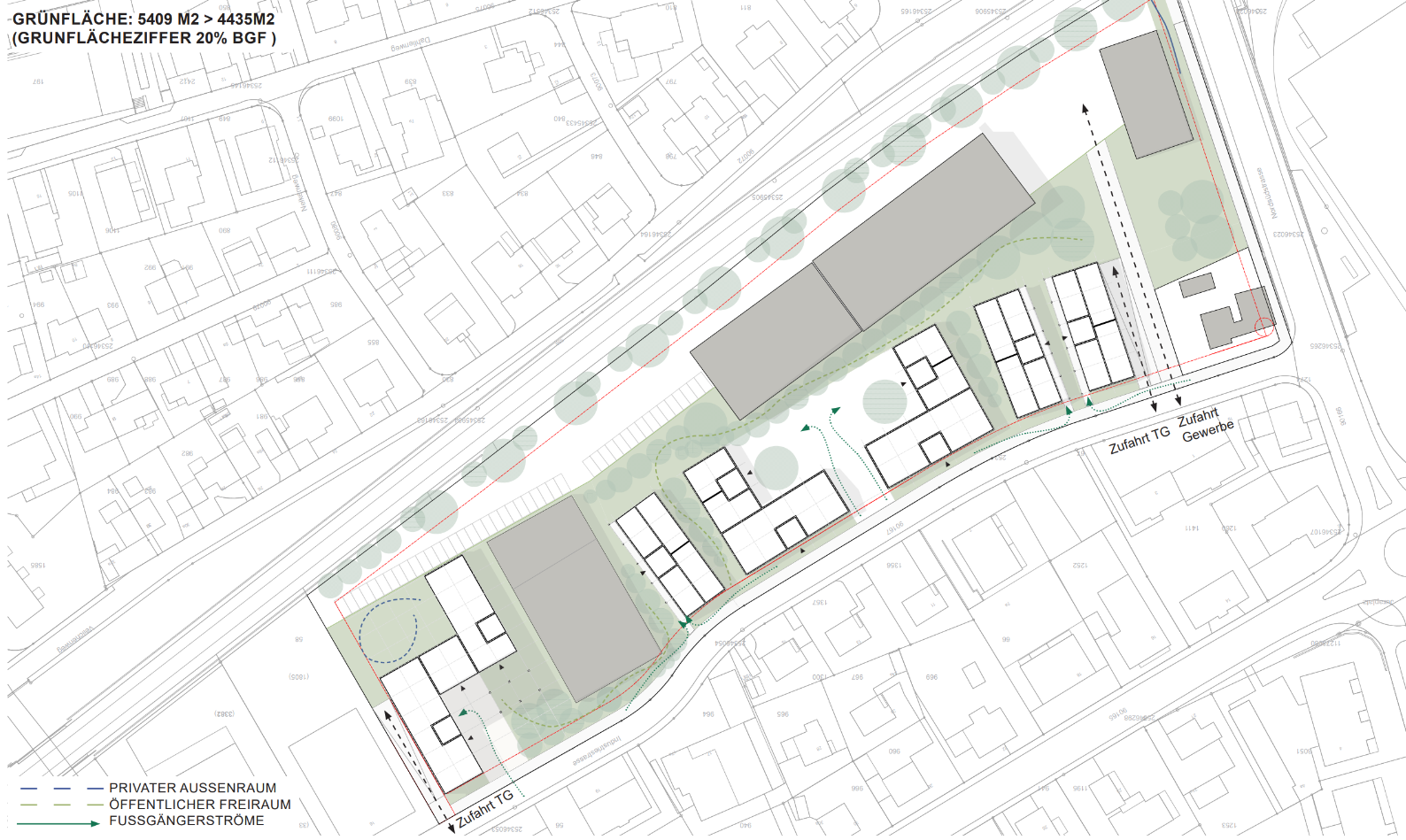
This overview illustrates the project’s central vision: a balanced combination of a nursing home and residential units. Spatial cohesion arises not from uniformity, but from functional complementarity. The generous use of green spaces, the network of pathways, and the clearly defined allocation of uses enable a resilient, socially connected neighborhood with a promising future.
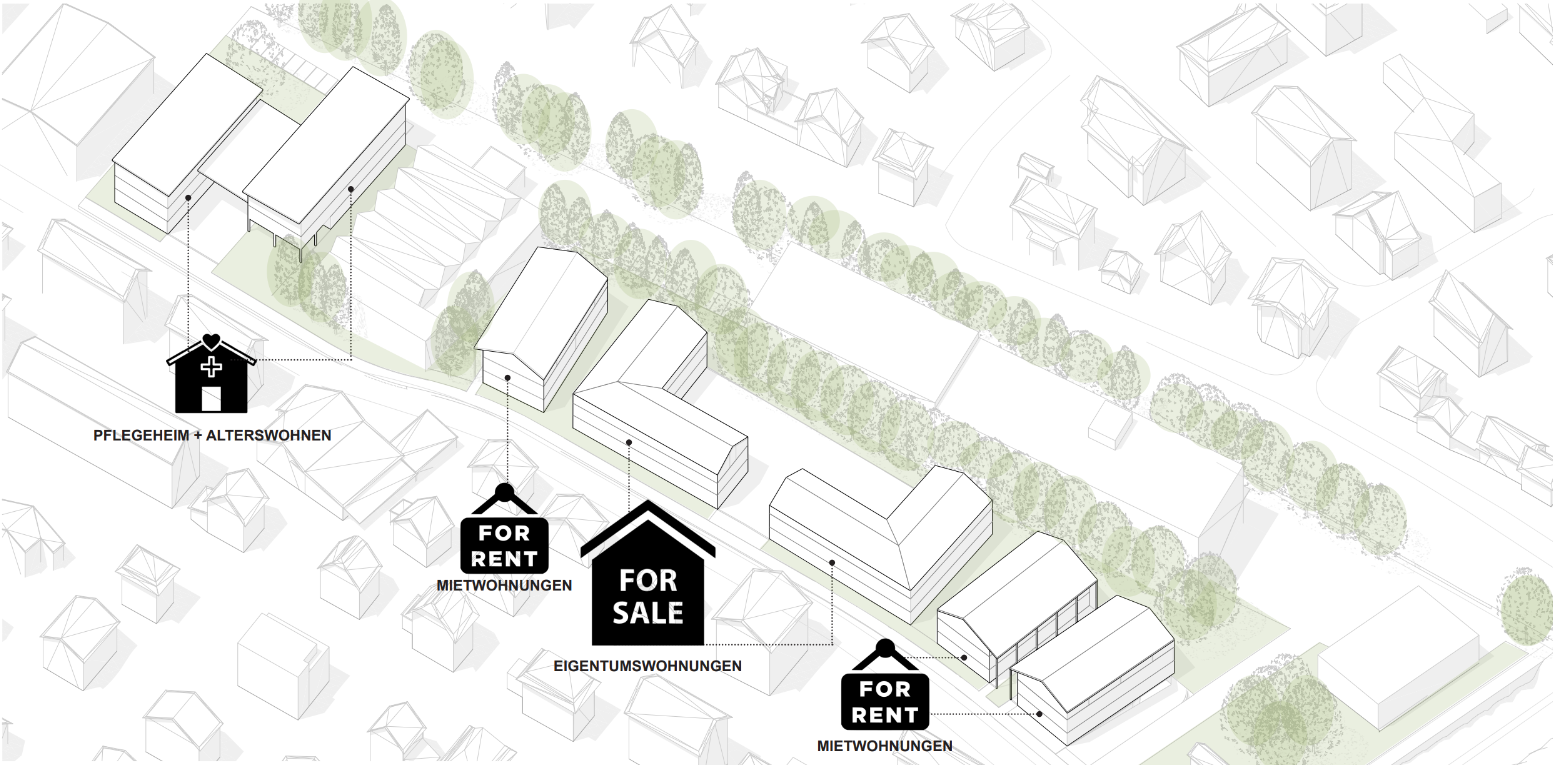
The axonometric projection clearly illustrates the spatial arrangement of the three main functions: the nursing home to the west (marked with a cross), the rental apartments in the eastern section (FOR RENT), and the condominiums in the center (FOR SALE). This layout allows for a balanced mix of long-term rental stability and capital return through sales. At the same time, it ensures good accessibility and a sense of community within the site.
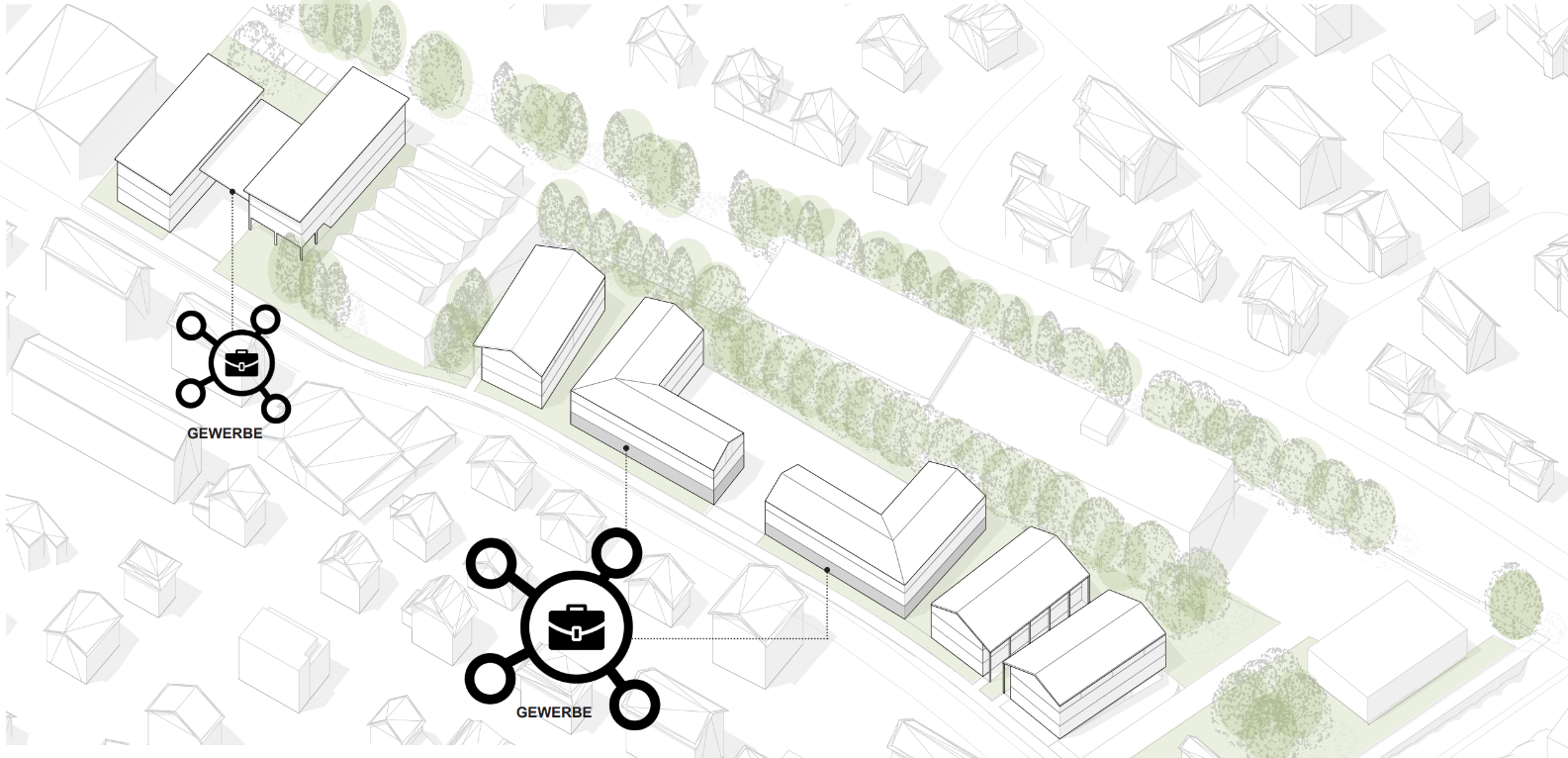
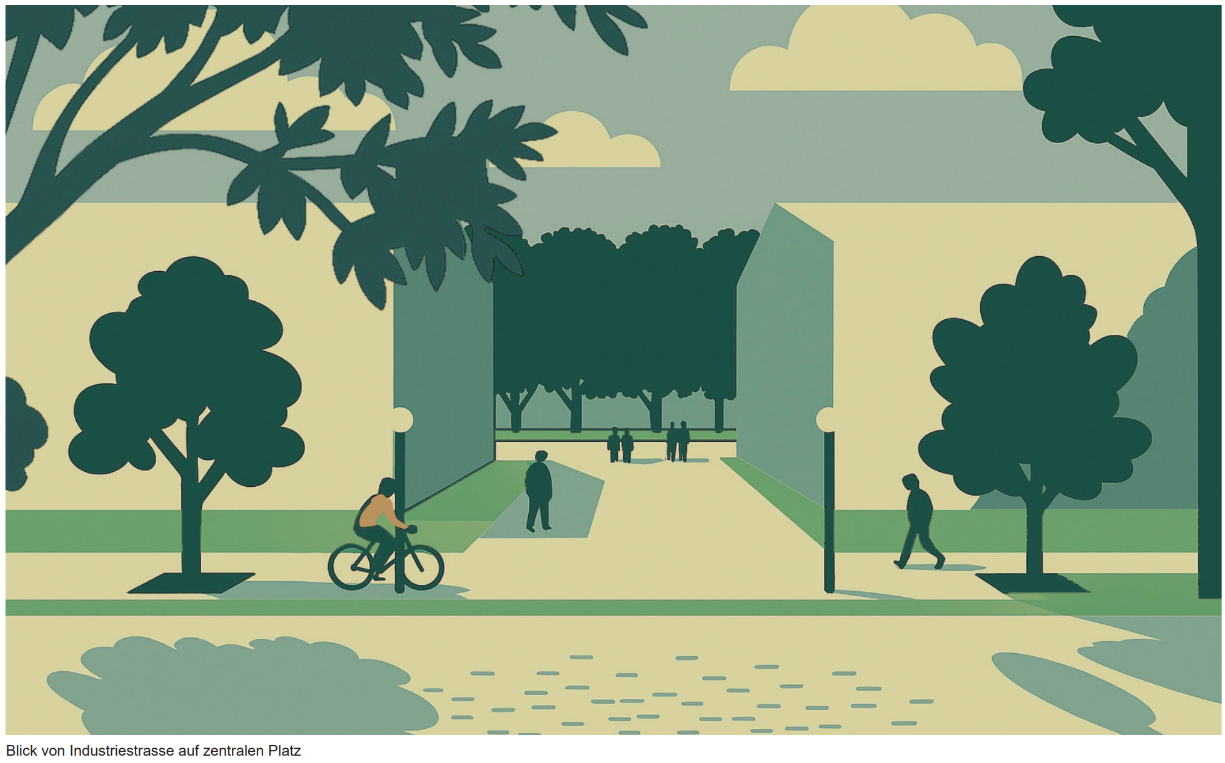
The commercial units are strategically located along the main access routes and serve as a link between the nursing home, residential areas, and public spaces. The mix of uses—including retail, service spaces, and neighborhood amenities—creates synergies for all user groups, both functionally and socially.
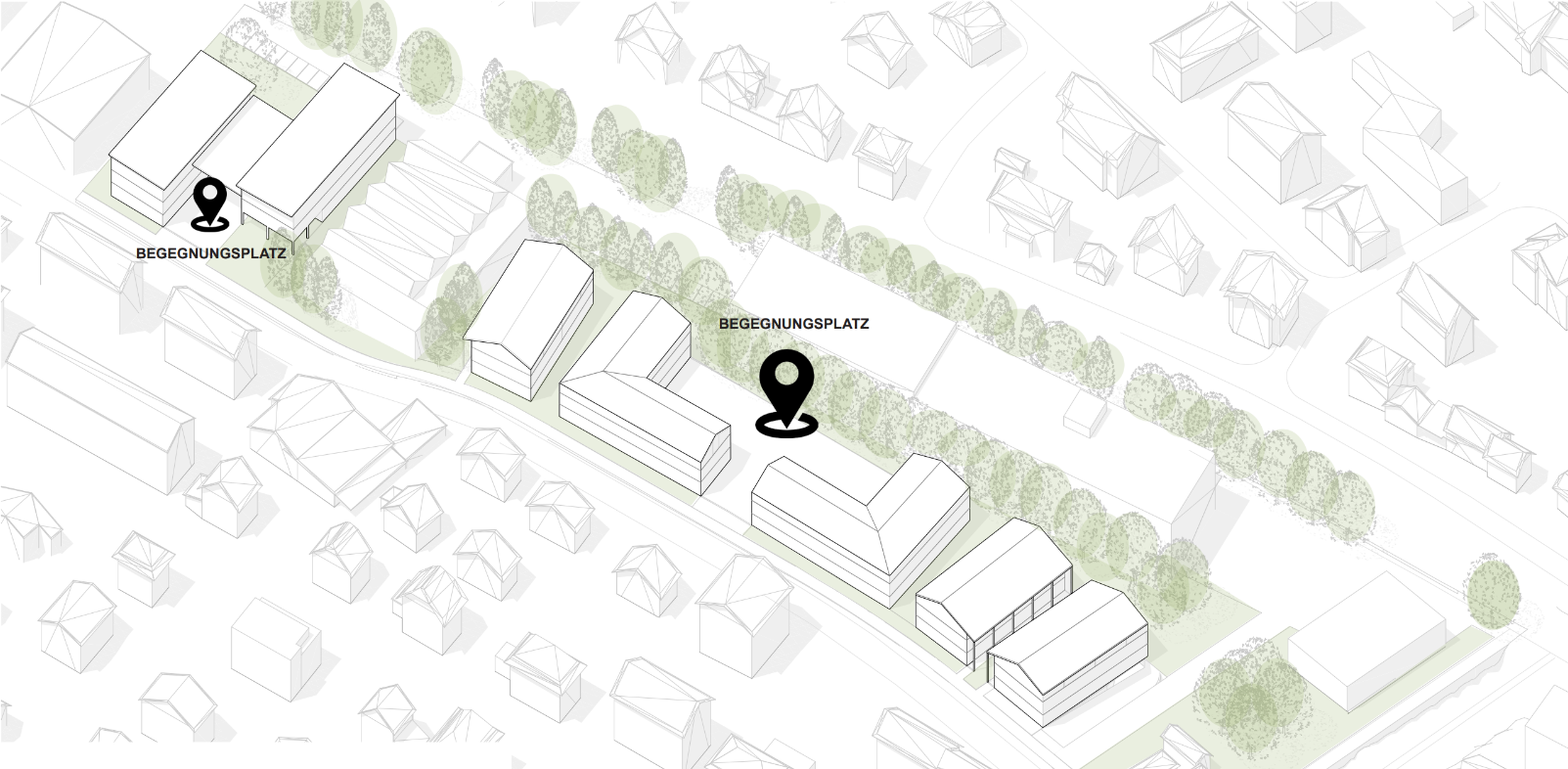
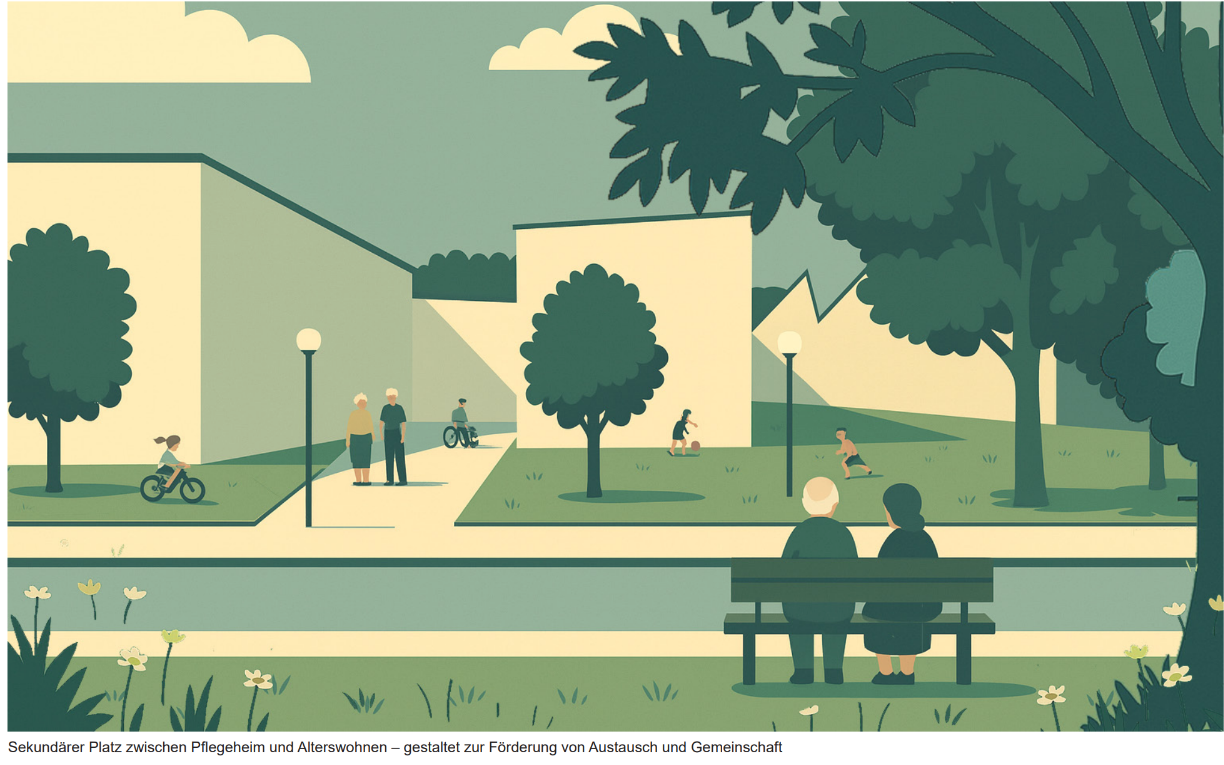
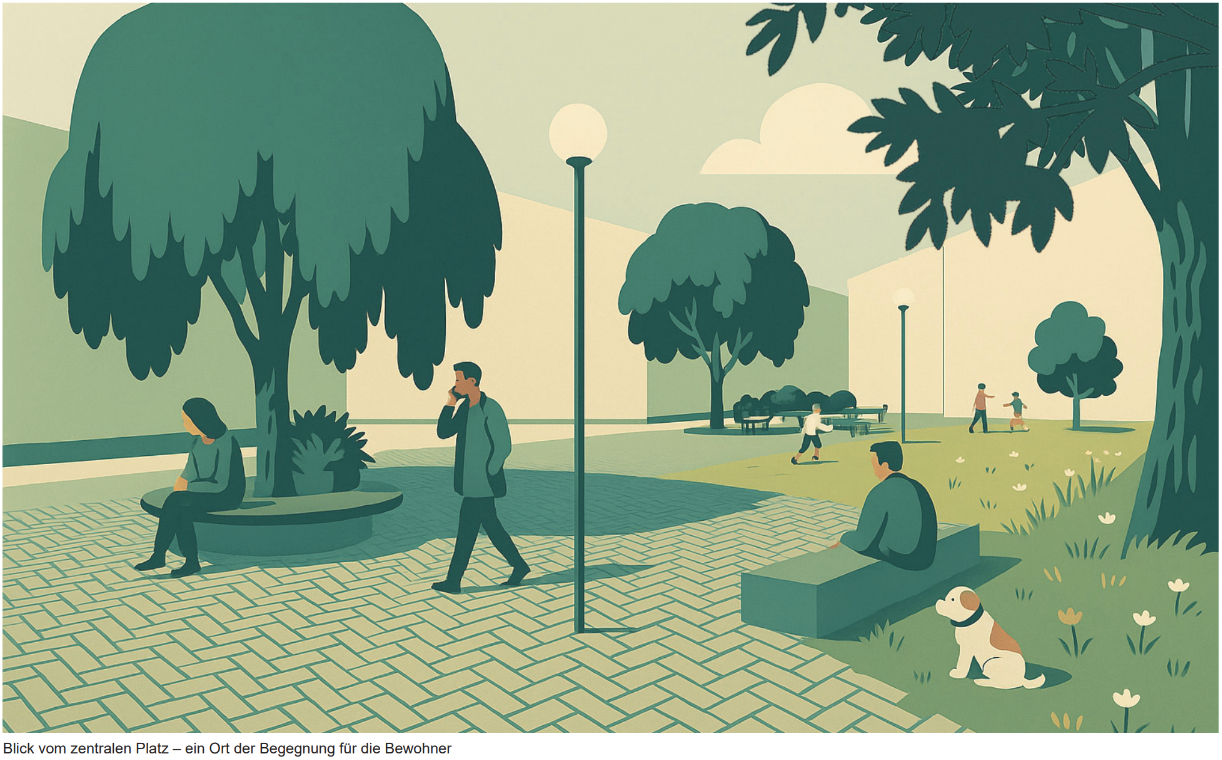
The gathering space serves as the physical and social heart of the project. It connects the nursing home and the residential area, creating a place that fosters a sense of community and offers a high quality of life—barrier-free, lush with greenery, and open to the public. Its location encourages interaction and intergenerational exchange.
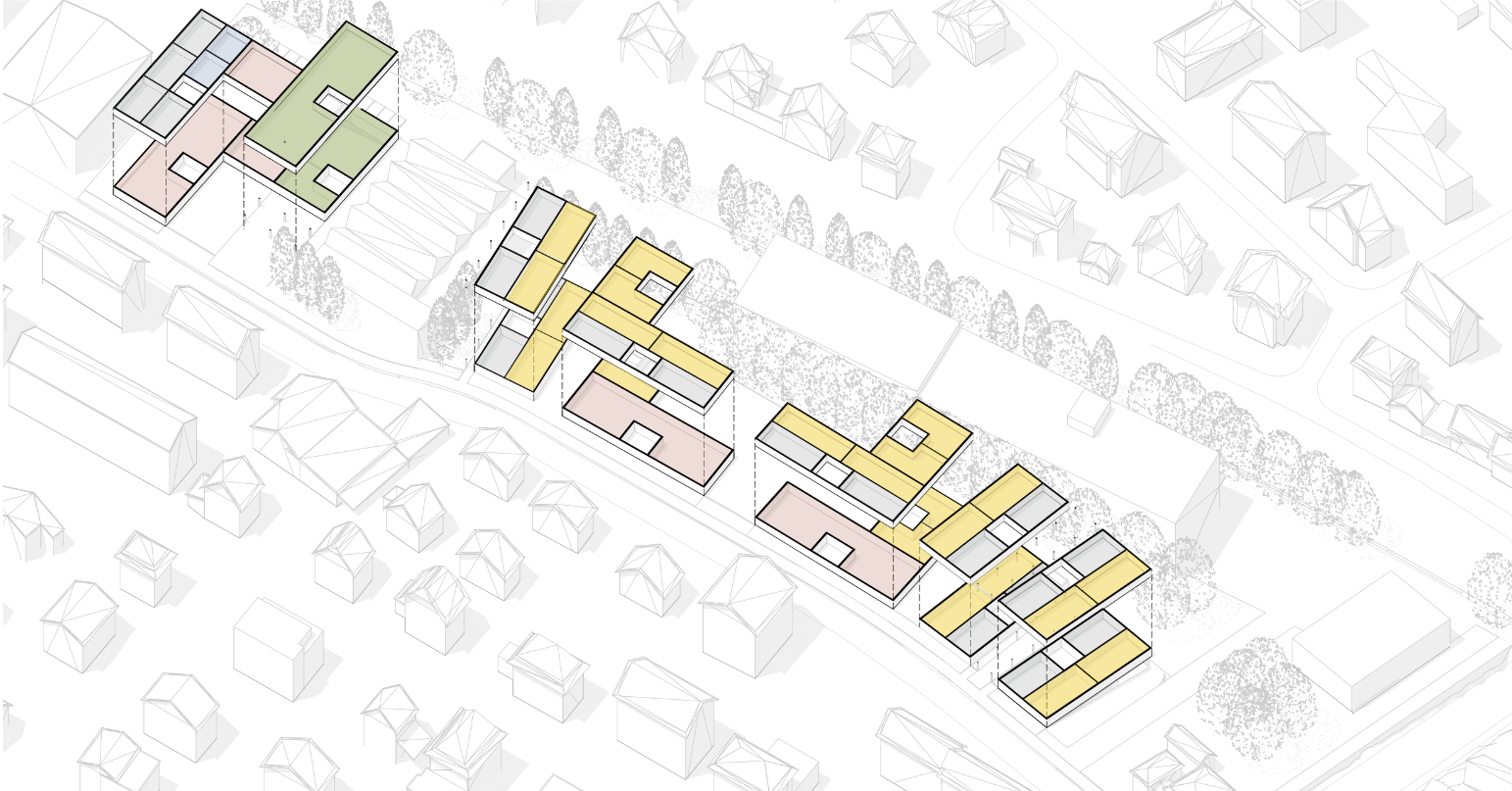
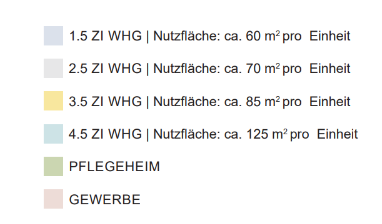
The following axonometric projections illustrate the vertical layout of the various units—from the nursing home on the ground floor to the residential floors above. The principle of functional stacking is particularly evident here: robust commercial uses on the lower levels, flexible residential units on the upper levels.
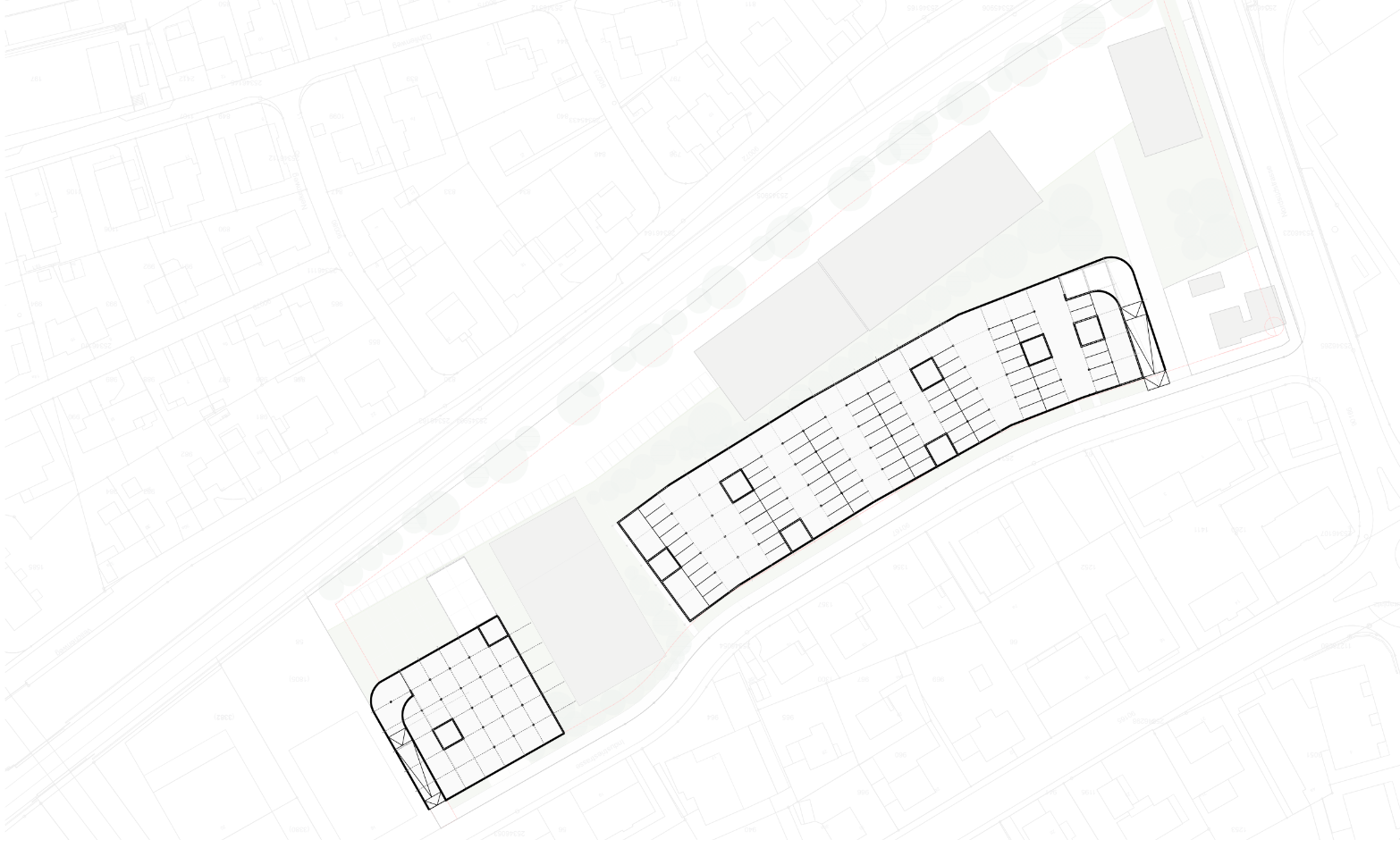
The illustration demonstrates how the project can respond to additional needs over the long term—whether through an expansion of care services, new forms of housing, or supplementary infrastructure. The central green axis remains the backbone of the development. The arrangement of the buildings allows for gradual densification without compromising the project’s identity or quality of life. The result is a system with a high degree of internal adaptability.
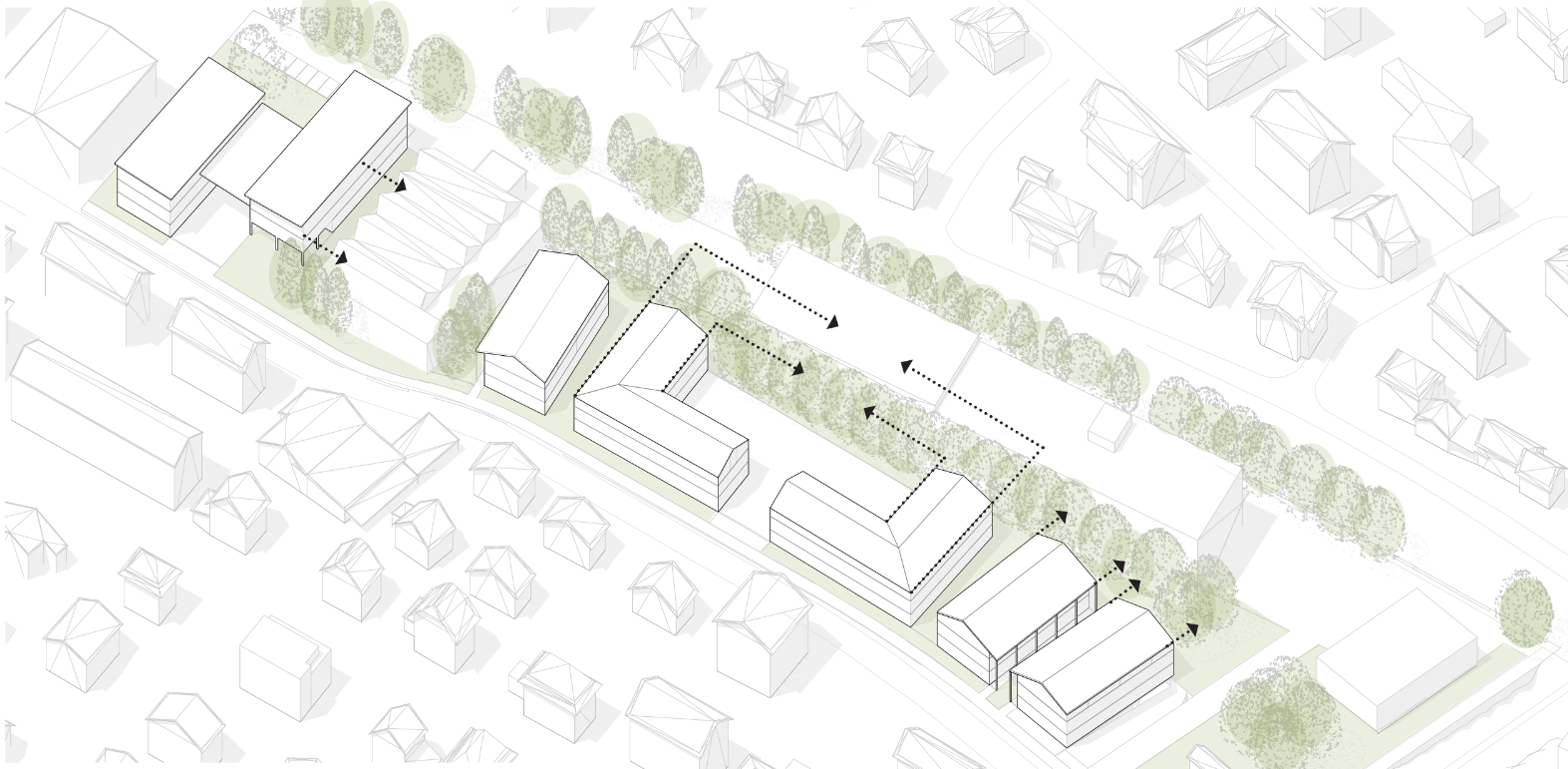
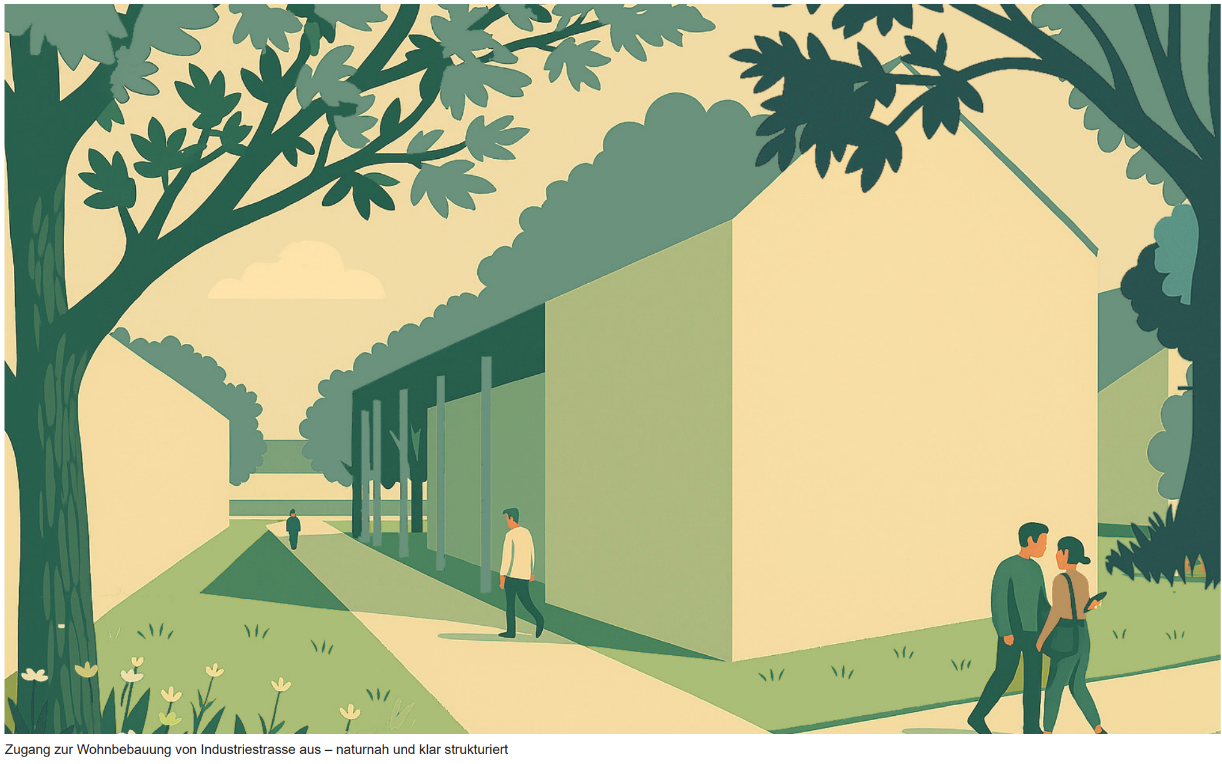
This perspective illustrates the potential integration of additional buildings along the internal access route. The site is structured in such a way that new units—whether for assisted living, communal spaces, or care facilities—can be seamlessly incorporated. The basic urban framework is preserved, enabling phased development with social cohesion.
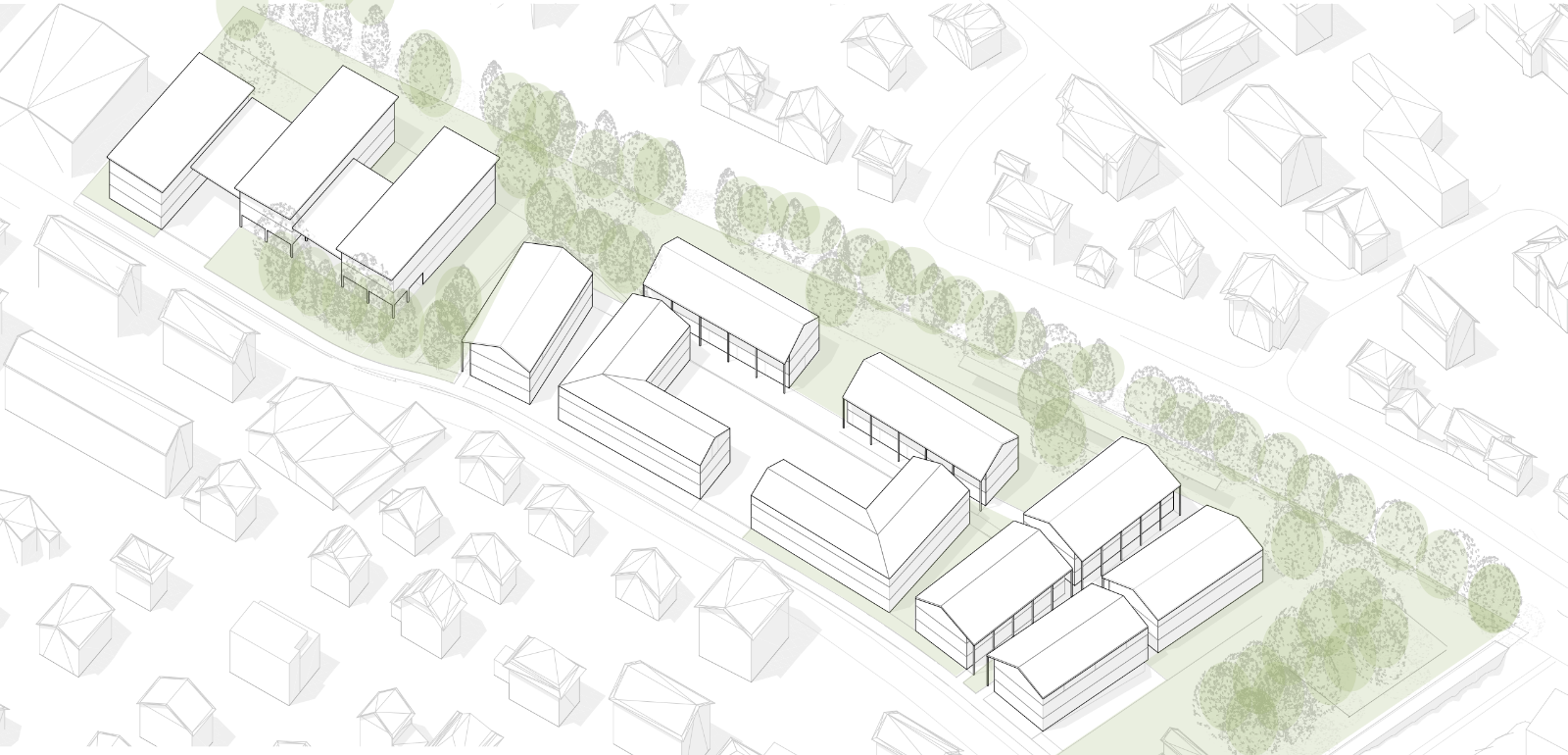
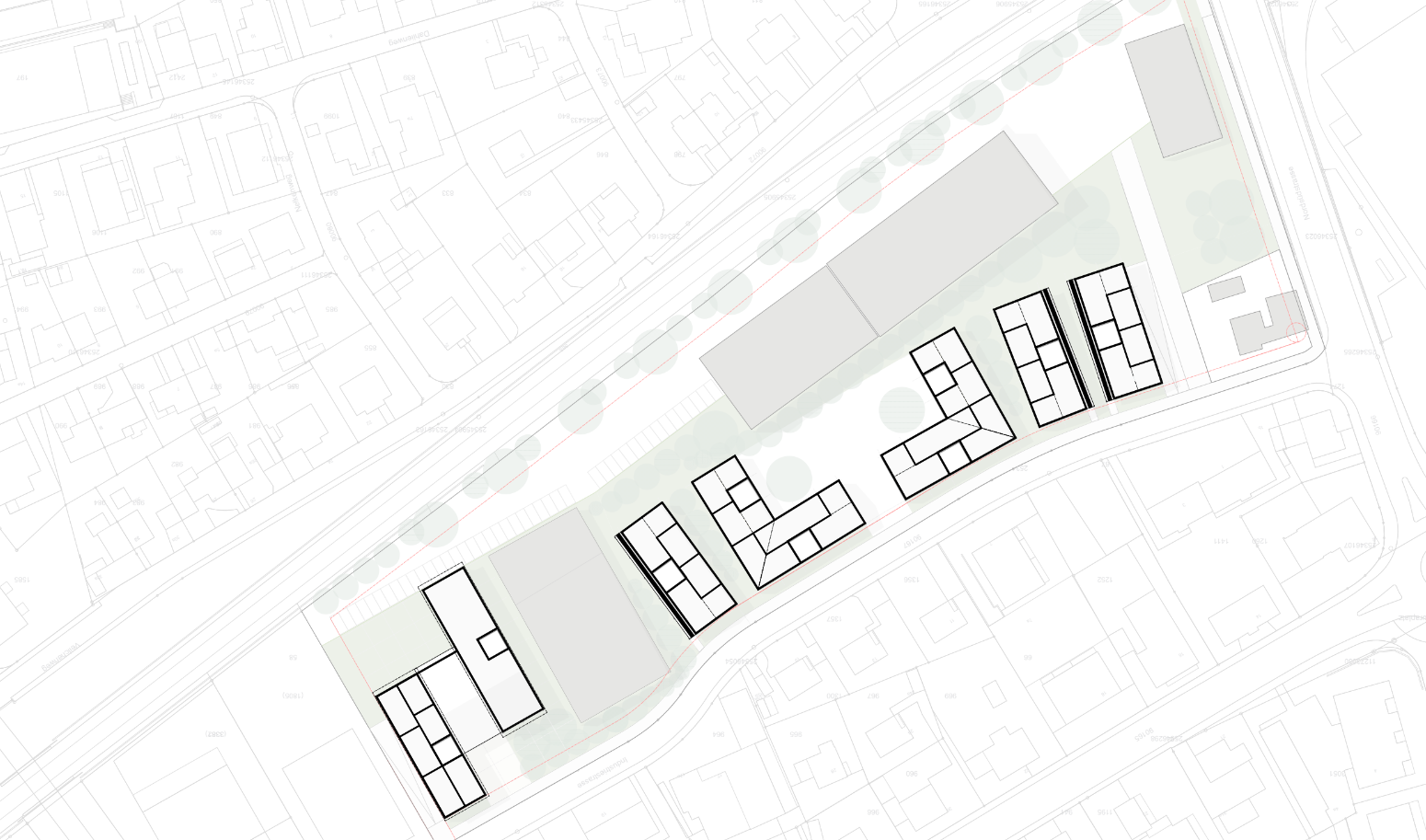
The site plan outlines a potential development over a 50-year timeframe. The existing development serves as the starting point for a gradual densification based on the principle of mixed-use: housing, care facilities, and neighborhood amenities. The green center will be preserved and further developed as an identity-defining element. The vision is not a master plan—but rather a strategic framework that leaves room for change.
Diversity – Integration – Senior Housing
A neighborhood that isn’t just built—it’s actually used. You can plan floor space, calculate volumes, and estimate returns. But what we’ve developed with VIA is more than just an architectural concept. It’s a place that responds to real needs:
- For people who are growing older—and want to stay that way.
- For families looking for affordable housing.
- To a neighborhood that works.
It is a place that integrates care without isolating. It enables ownership without displacing. It offers rental housing without neglecting residents. VIA isn’t just economically sound—it’s long overdue from a social perspective. A neighborhood that couldn’t be built just anywhere, but right here. Right in the heart of reality. Right in the heart of life.